
Vinyl Fabric Tips
Industrial Curtain and Divider Vinyl: What to Look For
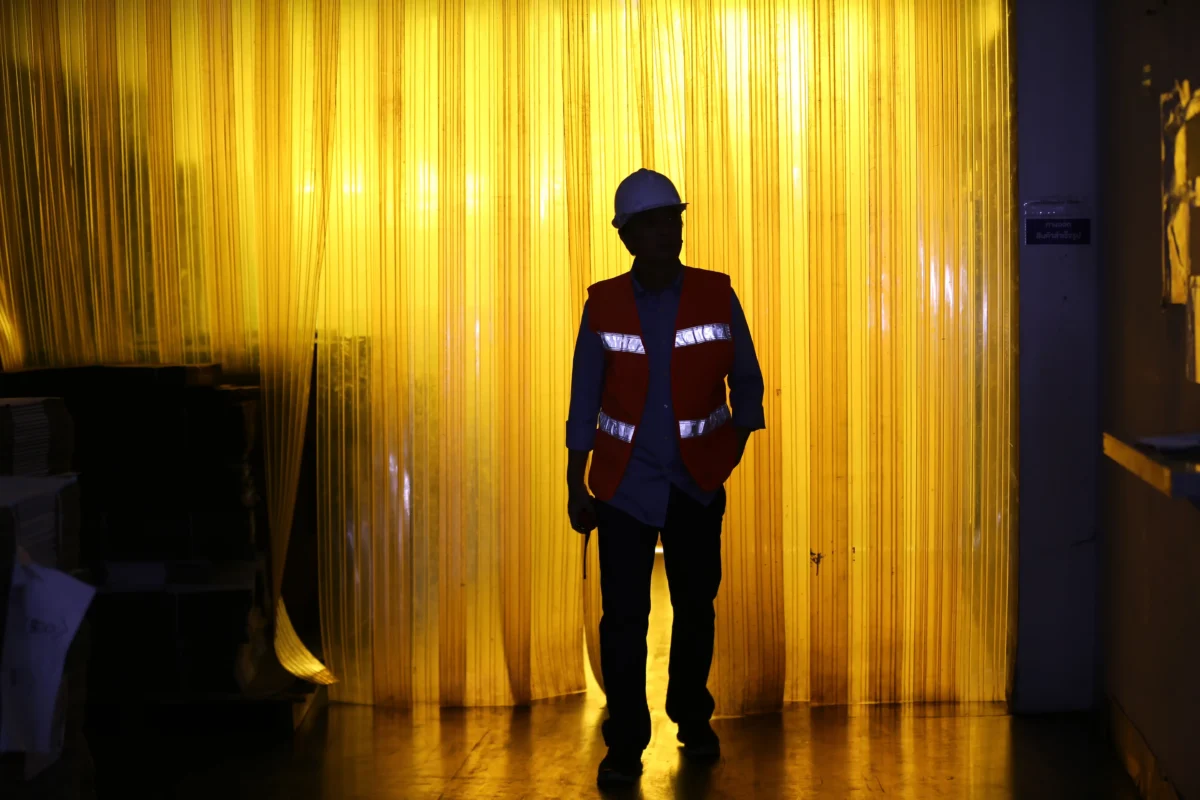
Sep
Industrial curtain and divider vinyl needs to be rated for the specific conditions of warehouse and manufacturing environments, not just sold into them. That means verified tensile strength and tear resistance for curtains that get grabbed, bumped, and brushed by equipment every day; genuine cold crack resistance for facilities with loading docks or uncontrolled temperature swings; waterproofing for high-humidity and refrigerated spaces; and flame resistance anywhere welding or grinding is happening nearby. This article covers the structural specs that actually matter, how temperature and moisture affect material performance over time, and the safety and workflow features worth factoring in before you order.
Key Strength and Flexibility Features for Warehouse Environments
Industrial curtain vinyl that holds up in a real warehouse needs to clear three structural thresholds: tensile strength and tear resistance to handle constant pulling, bumping, and equipment contact without splitting; enough flexibility to glide on track systems without binding or fighting workers; and impact resistance to absorb the hits that happen in any active facility without puncturing or requiring constant patching. A material that misses on any one of those creates operational problems that compound quickly in a busy environment.
Nobody thinks much about industrial curtains until one fails. Then it’s all anyone can talk about. A curtain that tears six months in, or one that gets so stiff in winter that workers just shove it aside and leave it there, or one that gets clipped by a forklift and has to be replaced entirely. Those are the moments when people start asking what they should have checked before they bought it. Warehouses and manufacturing floors don’t give materials an easy life. The vinyl separating one zone from another is going to get pulled, bumped, dragged against, and exposed to temperature swings and moisture on a regular basis. The right material handles all of that without making it anyone’s problem.
Tensile strength and tear resistance are where the spec conversation has to start. Warehouse curtains get opened and closed constantly, and not gently. Workers grab them and shove them out of the way. Forklifts brush the surface when turns run a little tight. Pallet loads make contact. Vinyl without real tensile capacity and reinforced scrim backing stretches and splits under that kind of repeated stress, sometimes looking fine for months before every stress point shows up at once. Industrial grade vinyl with proper backing construction holds its shape through all of that. Something built for a lighter application and being stretched into warehouse service is going to let you know pretty quickly that it wasn’t built for this.
Flexibility is the spec that gets overlooked and then causes real operational headaches. Vinyl that’s too stiff doesn’t glide along track systems the way it should. It binds. Workers start forcing it. Some of them just stop bothering and leave the curtain open, which defeats the purpose of having it. Beyond that, rigid material transfers stress directly to the mounting hardware every time it moves, which accelerates wear on both the track and the hanging points over time. Good industrial vinyl has enough give that it operates easily and absorbs movement rather than fighting back against it. That combination keeps the system working the way it was installed and keeps workers actually using it the way they’re supposed to.
Impact resistance rounds out the structural picture. Things hit divider curtains in warehouses. Equipment swings wide, carts move fast, loads shift at the wrong moment. Vinyl that can’t take a hit without puncturing or tearing means constant patching or section replacement, which is both a maintenance burden and an indicator that the wrong material got specified for the job. Industrial curtain vinyl is built to absorb the kind of contact that would damage lighter materials, and that toughness is what keeps a curtain system functional in a real operational environment rather than just on day one.
Selecting Vinyl That Withstands Temperature Fluctuations
Temperature instability is one of the more predictable reasons industrial curtain systems fail ahead of schedule, and it’s almost entirely avoidable with the right specification. Facilities without full climate control put curtain vinyl through genuinely hot summers and genuinely cold winters, and material that wasn’t formulated for that range will show it. Cold crack resistance and upper-temperature dimensional stability are both worth verifying against the actual conditions in your facility, including the worst days of the year, not just the average operating range.
Cold does specific damage that’s worth understanding before it shows up in your curtains. When temperatures drop, vinyl that wasn’t formulated for low-temperature performance gets stiff and starts cracking right along fold lines and attachment points, which happen to be exactly the spots that flex the most during use. Loading dock approaches are where this shows up worst, because those doors open constantly and cold air pours in every time. A curtain running a dock approach in a northern climate winter needs to be genuinely cold crack resistant, not just rated for moderate variation. Once cracking starts at the folds, the material starts losing its seal and deteriorating faster from that point forward. It doesn’t recover.
Heat creates a different set of problems. Near production equipment that throws off significant heat, or in a facility that just gets brutally hot in summer, lower grade vinyl softens and starts to deform. Curtains that were hanging straight begin to sag. Sections that are supposed to overlap and hold a seal start pulling apart. High performance industrial vinyl holds its shape under heat because it’s formulated to maintain dimensional stability rather than softening when temperatures climb. In any facility where the curtains are providing real thermal separation or contamination control between zones, that stability isn’t optional.
Moisture deserves its own attention, particularly in cold storage, refrigerated distribution, and high-humidity production environments. Condensation builds up on divider surfaces in those spaces, and if the vinyl absorbs it, the moisture works into the backing and starts degrading the material’s structural integrity from the inside out, slowly and quietly until the damage is already done. Waterproof vinyl keeps moisture on the surface where it can be managed rather than letting it migrate into the material. When you factor temperature swings and moisture exposure together, the picture of what a curtain vinyl actually needs to handle day after day in a specific facility gets a lot clearer than a general spec sheet tends to show.
Industrial Curtain Vinyl Specification by Facility Type
| Facility Type | Critical Spec | Temperature Concern | Additional Requirement |
| Warehouse with loading docks | Cold crack resistance | Cold air infiltration in winter | Impact resistance for equipment contact |
| Refrigerated / cold storage | Waterproofing + cold crack | Sustained low temps and condensation | Flexibility at cold temps for easy operation |
| Manufacturing with heat sources | Dimensional heat stability | High ambient heat near equipment | Flame resistance if welding or grinding nearby |
| Food production / pharma | Smooth, cleanable surface | Varies by facility | Antimicrobial or FDA-compliant options |
| High-traffic distribution center | Tensile strength + tear resistance | Variable, often uncontrolled | Clear panels for forklift visibility |
| Welding / fabrication zones | Flame resistance (FR rated) | High heat near curtain lines | Verified FR certification, not just claim |
How Specialty Materials Improve Safety and Workflow Efficiency
Beyond structural and environmental performance, the specific material features of industrial divider vinyl have a direct effect on how safe and efficient a facility is to work in. Flame resistance is non-negotiable anywhere welding or grinding happens near curtain lines. Clear panel inserts eliminate the blind-spot problem that solid curtains create at forklift crossings. Sound dampening reduces noise transfer between adjacent zones in ways that affect both focus and error rates. And a surface that’s fast to clean actually gets cleaned, which matters more than most people account for when they’re specifying curtain systems.
Flame resistance is the one that tends to get skipped until it becomes a compliance problem, at which point it’s already too late to avoid the disruption. If an operation involves welding, grinding, or any open heat source near the curtain lines, flame resistant vinyl is the correct specification for those conditions, not a cautious add-on. It’s also what code compliance requires in a growing number of jurisdictions and industries. The right time to check what certifications apply to your specific setup is before ordering, when the answer is just information. After ordering, it’s a problem.
Clear panel inserts are something more facilities should be running and fewer actually do, which is hard to explain once you understand what they solve. A solid curtain between two active zones is a blind spot, plain and simple. A forklift operator can’t see who’s walking through from the other side before they push the curtain open. A worker can’t see a load coming. That’s not a theoretical safety concern; it’s a documented pattern in warehouse accident reports. Transparent vinyl panels built into the curtain at eye level and equipment height give both sides a chance to see before anyone moves through. The zone separation stays intact. The blind spot goes away. That’s a meaningful safety improvement that doesn’t require any structural changes to the system.
Noise dampening tends to get dismissed as a soft benefit until someone has spent a full shift in a manufacturing facility with loud equipment running nearby. It doesn’t make a loud facility quiet, but vinyl with sound dampening properties takes enough edge off in adjacent zones that the difference is noticeable to anyone working there. People communicate more easily. Focus holds longer. Mistakes that come from distraction and fatigue become less likely. That’s a work environment quality issue and a productivity issue, and both of them matter when you’re thinking about what a curtain system is actually doing for your operation.
Cleaning practicality is worth thinking through before it becomes a recurring frustration. A curtain with a deeply textured surface or one that holds dust and debris is a maintenance problem that compounds over time, because things that are hard to clean tend to not get cleaned on schedule. Smooth industrial vinyl wipes down fast. In food production or pharmaceutical environments that’s a hygiene requirement that gets audited. In a standard warehouse it’s the difference between a maintenance task that actually happens and one that keeps getting pushed back until the curtain looks bad and someone finally deals with it. The full picture of what a curtain system needs to deliver, strength, temperature and moisture resistance, flame ratings, visibility, noise, cleanability, none of it works in isolation. The facilities that get the most life out of their curtain systems are the ones that thought through all of it before ordering.
Frequently Asked Questions
What makes industrial curtain vinyl different from standard vinyl?
The difference is significant and it shows up fast in real use. Standard vinyl wasn’t built for the tensile stress of being pulled open and closed dozens of times a day, the impact of equipment contact, or the temperature extremes and moisture conditions of a warehouse floor. Industrial curtain vinyl has reinforced scrim backing, higher tensile and tear strength ratings, and is formulated to hold up under conditions that would shred lighter material within a few months. If a supplier is offering standard vinyl for an industrial curtain application without flagging it, that’s worth pushing back on directly.
Why is flexibility important in divider systems?
A curtain that’s too stiff to use easily stops getting used correctly, and that problem tends to develop gradually until it’s already affecting the whole operation. Workers push through rather than sliding, leave things open rather than wrestling with them, or force the curtain hard enough that the mounting hardware starts failing ahead of schedule. Rigid vinyl also transfers all movement stress directly to the track and hanging points rather than absorbing any of it, which accelerates wear on the hardware over time. Flexible vinyl that moves easily keeps the system working the way it was installed and keeps workers actually engaging with it.
Can industrial vinyl handle extreme temperatures?
Quality industrial vinyl can, but the key word is verified. Don’t assume that anything marketed as industrial-grade covers your conditions. Ask specifically for the cold crack threshold and the upper temperature stability limit, then check those numbers against what your facility actually experiences, not just the average days but the worst ones. A loading dock curtain in Minnesota in January is a very different environment from the interior of a climate-controlled distribution center in the same city, and the spec should reflect that difference explicitly.
Are flame resistant materials necessary for warehouses?
For a lot of facilities, yes, and it’s worth finding out before the material is ordered rather than during an inspection. Welding areas, grinding operations, zones with open flames or significant heat sources near the curtain lines, these are environments where flame resistant vinyl is the right specification regardless of whether anyone has specifically asked about it yet. Beyond the safety reasoning, many jurisdictions and industries have specific code requirements around this. A knowledgeable supplier can tell you quickly what certifications apply to your setup so you’re working from actual requirements rather than assumptions.
How do clear vinyl panels improve workflow?
They solve a real safety problem that solid curtains create and that tends to get normalized until something goes wrong. When both sides of a curtain are active, a solid panel is a blind spot. A forklift operator has no way of knowing if someone is walking through from the other side before they push through. Clear panels at the right heights give both sides a chance to see before they move, and that awareness changes behavior in ways that genuinely reduce the conditions for accidents. Beyond the safety benefit, supervisors get visibility across zones without physically walking through, which is a small operational gain that adds up over the course of a full shift.
